The short answer
Seven Tennessee Valley Authority (TVA) lakes are near Knoxville: Fort Loudoun, Tellico, Watts Bar, Melton Hill, Norris, Douglas and Cherokee. They differ by river, by which side of the city they are on, by whether a lock or canal joins them, and by how far the water drops in winter. Tennessee National, a private, gated lake and golf community, is on Watts Bar Lake in Loudon, Tennessee.
Key facts
- Seven Tennessee Valley Authority (TVA) reservoirs are near Knoxville: Fort Loudoun, Tellico, Watts Bar, Melton Hill, Norris, Douglas and Cherokee.
- Fort Loudoun and Watts Bar are on the Tennessee River. Tellico is on the Little Tennessee, Melton Hill on the Clinch, Norris on the Clinch and Powell, Douglas on the French Broad and Cherokee on the Holston.
- TVA says main-river reservoirs do not fluctuate as much as the tributaries. Watts Bar Lake changes about 5 to 6 feet between summer and winter.
- A canal joins Tellico to Fort Loudoun. Locks join Fort Loudoun to Watts Bar and Watts Bar to Melton Hill. Norris, Douglas and Cherokee have no lock.
- TVA lists Norris, Douglas and Cherokee among the tributary reservoirs that provide the most flood storage.
- Tennessee National is a private, gated lake and golf community on Watts Bar Lake in Loudon, Tennessee, about 30 minutes from Knoxville.
Seven TVA lakes are near Knoxville: Fort Loudoun, Tellico, Watts Bar, Melton Hill, Norris, Douglas and Cherokee. They differ by river, by which side of the city they are on, by whether a boat can get from one to the next, and by how far the water drops in winter.
Tennessee National is on Watts Bar Lake, in Loudon, so that is the lake we know best. For the other six we stick to what the Tennessee Valley Authority (TVA), the Tennessee Wildlife Resources Agency (TWRA) and Visit Knoxville publish, and we say who said what.
What lakes are near Knoxville?
Seven TVA lakes are near Knoxville: Fort Loudoun, Tellico, Watts Bar, Melton Hill, Norris, Douglas and Cherokee. Visit Knoxville's guide to Knoxville area lakes names nine. Seven are TVA reservoirs, and those are the seven on this page. The other two, Calderwood and Chilhowee, are smaller lakes that Visit Knoxville places on the edge of the Cherokee National Forest.
| Lake | River | Side of Knoxville | Kind of lake |
|---|---|---|---|
| Fort Loudoun | Tennessee | At Knoxville, then south and southwest | Main river |
| Tellico | Little Tennessee | Southwest | Tied to Fort Loudoun by a canal |
| Watts Bar | Tennessee | West | Main river |
| Melton Hill | Clinch | Northwest | Run-of-river |
| Norris | Clinch and Powell | North | Tributary storage |
| Douglas | French Broad | East | Tributary storage |
| Cherokee | Holston | Northeast | Tributary storage |
The rivers come from TVA's page for each reservoir. The compass directions are Visit Knoxville's. TVA says reservoir where most people say lake. It is the same water.
It helps to see the seven as one river system. TVA says the Holston and French Broad rivers converge to form the Tennessee River. TWRA says Fort Loudoun reaches up to that meeting point, and TVA places the lake at Knoxville. Watts Bar is the next lake down. The Little Tennessee runs close enough to Fort Loudoun that a short canal joins Tellico to it. By TVA's account, the Clinch runs from Norris Dam through Melton Hill and into Watts Bar Lake.
How are the lakes near Knoxville different?
They differ most in how far the water moves between summer and winter, and that follows the kind of lake. TVA puts it in one sentence: "Main-river reservoirs don't fluctuate as much as the tributaries because of their design and navigation requirements."
- Main-river lakes. Fort Loudoun and Watts Bar carry boat traffic on the Tennessee River, so TVA holds a winter minimum on each for navigation. On Watts Bar Lake, summer pool runs about 740 to 741 feet and the winter minimum is 735 feet. That is a change of about 5 to 6 feet.
- Tributary storage lakes. TVA lists Norris, Douglas and Cherokee among the tributary reservoirs that provide the most flood storage. TVA lowers them for winter to make room for flood water, and they change far more than a main-river lake. We will not quote another lake's numbers. TVA publishes each one.
- The two in between. TWRA says Tellico sees the same water level changes as Fort Loudoun, because its outflow normally passes through the canal into Fort Loudoun. TVA calls Melton Hill a run-of-river reservoir, meaning water passes through without being stored long-term.
The calendar matters too. TVA says it begins releasing water from tributary storage reservoirs at a faster rate after Labor Day weekend, and that aggressive filling toward summer levels begins in mid-March. On Fort Loudoun and Watts Bar, TVA says the seasonal drawdown begins on November 1. So a summer visit shows you the high water. Go back in winter before you buy on any of them.
None of this is a flaw. It is how each lake is built to work. TVA says birdwatchers enjoy the fall migration at Douglas, where shore birds feed on shoreline exposed as the reservoir is lowered. TWRA says much of Cherokee's drawdown zone is easy for the public to reach and offers bank fishing. Our Watts Bar, Norris and Douglas comparison goes deeper on lake levels.
Which lakes near Knoxville can you boat between?
Four of the seven: Fort Loudoun, Tellico, Watts Bar and Melton Hill. The other three each stand alone.
- Tellico and Fort Loudoun. A short canal joins them. TWRA says Fort Loudoun connects directly to Tellico by the canal, and TVA says the canal gives commercial barges access to Tellico without the need for a lock.
- Fort Loudoun and Watts Bar. A lock at Fort Loudoun Dam, in Lenoir City, raises and lowers boats between the two.
- Watts Bar and Melton Hill. A lock at Melton Hill Dam, on the Clinch River, joins them. TVA says Melton Hill is "the only dam in the tributary reservoir system with a navigation lock."
- Norris, Douglas and Cherokee. That sentence from TVA leaves these three without a lock. To boat one of them, you keep the boat there or bring it on a trailer.
So Watts Bar is the lake in the middle. From it, a boat can reach Fort Loudoun and Melton Hill through one lock each, and Tellico by way of Fort Loudoun's canal. One more lock, at Watts Bar Dam, leads down to Chickamauga Lake, toward Chattanooga. How Tennessee River locks work covers how locking through works and who to ask before you go.
What is each lake known for?
Here is what the agencies say about each one.
- Fort Loudoun. TVA says it is known for bass fishing, boating and birdwatching. Visit Knoxville says it is most famous for the Vol Navy, the boaters who dock at Neyland Stadium for University of Tennessee football games. See Watts Bar Lake vs Fort Loudoun Lake.
- Tellico. TVA says it stretches along the Little Tennessee River into the mountains of East Tennessee and offers trout and bass fishing. See Watts Bar Lake vs Tellico Lake.
- Watts Bar. TVA says it is popular for boating, fishing, swimming and camping. It has more than 39,000 acres of water and 722 miles of shoreline.
- Melton Hill. TVA says it has a nationally recognized rowing course and is a spring training site for college teams from across the eastern United States. TWRA places it on the Clinch River near Oak Ridge.
- Norris. TVA says Norris Dam was the first dam it built, and calls Norris the largest reservoir on a tributary of the Tennessee River. Visit Knoxville says the lake is known for its houseboat culture.
- Douglas. TVA says it runs through the foothills of the Great Smoky Mountains and is known for picnicking, camping, boating and fishing.
- Cherokee. TVA says its shoreline has public access areas, county and municipal parks, commercial boat docks and resorts, a state park and a state wildlife management area. See Cherokee Lake vs Tennessee National.
Which lake is Tennessee National on?
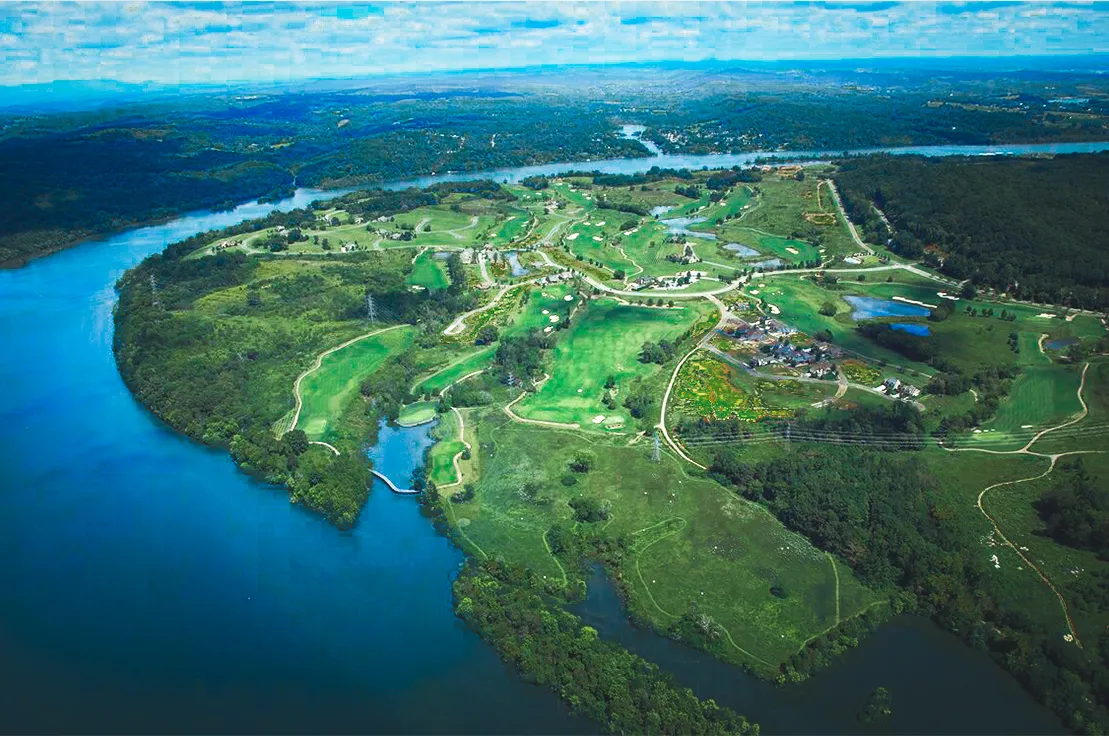
Tennessee National is on Watts Bar Lake. It is a private, gated lake and golf community in Loudon, Tennessee, about 30 minutes from Knoxville and about 10 minutes from I-75.
Inside the gates, on 1,492 acres:
- A full-service marina with 140+ boat slips.
- One Greg Norman Signature golf course. 18 holes, 7,393 yards, par 72.
- A clubhouse with Kendall's restaurant, a pool, a fitness center, pickleball, tennis and walking trails.
- 22 social clubs and 180+ events a year.
On the water, that means a lake that changes about 5 to 6 feet through the year, a 72-mile navigable reservoir, and locks that connect to the rest of the Tennessee River system.
The honest part
We live on one of these lakes. Read this page knowing that.
- "Near" is a judgment call. Visit Knoxville counts nine lakes. We covered seven. Another list might draw the line somewhere else.
- Each lake is long. One end can be a very different drive from the other. We gave no drive times for the other six because the answer depends on the address. Time it yourself, at the hour you would really drive it.
- The county matters. Visit Knoxville lists more than one county for most of these lakes, and property tax is set by each county. Ask the county office about the exact address.
- Details change. Confirm current lake levels and shoreline rules with TVA, and ask the U.S. Army Corps of Engineers about the locks.
No single lake wins for everybody. Pick the one that fits how you plan to use it, and see it in winter before you sign.
Frequently asked questions
What lakes are near Knoxville, Tennessee?
Seven Tennessee Valley Authority (TVA) lakes are near Knoxville: Fort Loudoun, Tellico, Watts Bar, Melton Hill, Norris, Douglas and Cherokee. Fort Loudoun Lake is at Knoxville itself. Visit Knoxville's guide to Knoxville area lakes also names two smaller lakes, Calderwood and Chilhowee. Tennessee National is on Watts Bar Lake in Loudon, Tennessee.
Which lakes near Knoxville drop the most in winter?
Norris, Douglas and Cherokee lakes drop the most in winter. The Tennessee Valley Authority (TVA) lists all three among the tributary reservoirs that provide the most flood storage, and TVA lowers them for winter. Main-river lakes change far less. Watts Bar Lake changes about 5 to 6 feet between summer and winter. TVA publishes the figure for every lake.
Are the lakes near Knoxville connected?
Four of the seven TVA lakes near Knoxville are connected by water. A canal joins Tellico Lake to Fort Loudoun Lake. A lock at Fort Loudoun Dam joins Fort Loudoun Lake to Watts Bar Lake. A lock at Melton Hill Dam joins Melton Hill Lake to Watts Bar Lake. Norris, Douglas and Cherokee lakes have no lock.
Which lake runs through Knoxville?
Fort Loudoun Lake runs through Knoxville. The Tennessee Valley Authority (TVA) says Fort Loudoun Reservoir is located on the Tennessee River at Knoxville and is the uppermost in a chain of nine TVA reservoirs on the river. Fort Loudoun Dam is in Lenoir City. Watts Bar Lake begins below that dam.
Which lake is Tennessee National on?
Tennessee National is on Watts Bar Lake in Loudon, Tennessee, about 30 minutes from Knoxville. Watts Bar Lake is a TVA reservoir on the Tennessee River with more than 39,000 acres of water and 722 miles of shoreline. Tennessee National has a full-service marina with 140+ boat slips on Watts Bar Lake.
Facts about Tennessee National come from the community. Lake facts come from TVA. Rules, taxes, loans and insurance change, so confirm anything that affects a purchase with the right office or professional before you buy.