
Golf memberships aren’t one-size-fits-all. The structure, cost, and access vary widely between clubs — and the differences matter more than most buyers realize until they’ve already signed.
Before you commit, understand what you’re actually buying.
The Main Membership Categories
Most private golf communities offer some variation of these tiers:
Full Golf Membership. Unlimited access to the course, practice facilities, and typically the clubhouse dining and social events. This is the standard for serious golfers who plan to play three or more times per week. At many clubs, full members get priority tee times and access to member-only tournaments.
Sports or Athletic Membership. Access to amenities like the pool, fitness center, tennis or pickleball courts, and sometimes limited golf privileges — often a set number of rounds per month or access during off-peak hours. This works for households where one person golfs and the other doesn’t.
Social Membership. Clubhouse and dining access without course privileges. You can attend events, eat at the restaurant, and use some common areas, but you’re not playing golf. Some clubs allow social members to upgrade later.
Preview or Trial Membership. A short-term option — sometimes 6 to 12 months — that lets you test the club before committing to a full membership. Not every community offers this, but it’s worth asking about.
What’s Included Beyond the Course
The membership fee is only part of the equation. At many communities, especially those built around a lifestyle rather than just a golf course, membership bundles access to multiple amenities.
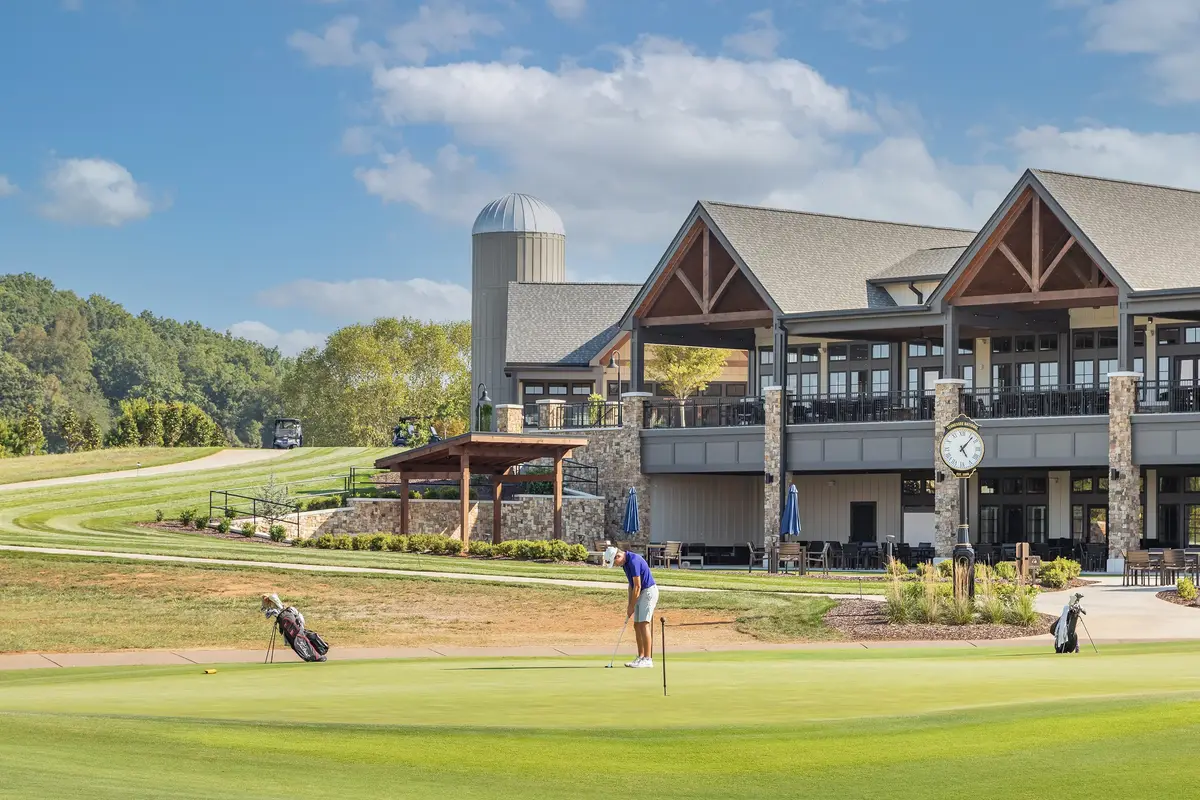
At Tennessee National, membership connects you to more than 18 holes. The private marina on Watts Bar Lake, the clubhouse, the pool, the social calendar — these are part of the community fabric. Understanding what’s bundled versus what’s add-on helps you compare apples to apples when evaluating different communities.
Some clubs charge separate marina fees, dining minimums, or activity fees on top of the base membership. Others bundle everything. Ask specifically: What does this membership include, and what costs extra?
Initiation Fees vs. Monthly Dues
Two numbers matter: what you pay to join and what you pay each month.
Initiation fees range from a few thousand dollars at newer communities trying to build membership, to six figures at established clubs with long waitlists. Some communities waive or reduce initiation fees for homeowners who purchase property — effectively rolling the membership into the real estate transaction.
Monthly dues cover course maintenance, staff, facilities, and operations. Expect anywhere from $300 to $800 per month for a full golf membership in East Tennessee. That’s significantly less than comparable communities in Florida, Arizona, or the Carolinas, where dues can exceed $1,000 monthly.
Ask whether dues are fixed or subject to annual increases. Ask about capital assessments — special charges for major improvements like course renovations or new facilities. These can appear unexpectedly at older clubs.
Questions to Ask Before Joining
Most prospective members ask about tee time availability and leave it at that. Go deeper.
Course condition and maintenance budget. A beautiful course in April might be neglected by August. Ask about the annual maintenance budget and how the course performs in the off-season. Year-round playability matters in Tennessee, where mild winters mean the course should be in solid shape 12 months a year.
Member count vs. tee time availability. A club with 400 full golf members and one 18-hole course will feel different than one with 200 members. Ask about the member-to-hole ratio and whether you’ll realistically get the tee times you want on Saturday mornings.
Guest policies. Can you bring visitors? How often? Is there a guest fee? If you’re the type who hosts friends and family frequently, restrictive guest policies will frustrate you.
Transfer and resignation policies. Life changes. Can you sell your membership? Is there a waitlist for resales? What happens if you need to resign — do you lose the initiation fee entirely, or is there a partial refund structure?
Food and beverage minimums. Many clubs require members to spend a minimum amount on dining each month or quarter. If you’re not a regular at the clubhouse restaurant, that minimum can feel like a penalty. Ask upfront.
The Real Estate Connection
In community-based clubs like Tennessee National, golf membership is often tied to property ownership. Buying a home or homesite typically includes membership access or makes you eligible at a preferred rate.
This changes the calculus. You’re not just evaluating a golf club — you’re evaluating a lifestyle investment. The membership enhances the property. The property grounds the membership. They work together.
When you compare the total cost of a Tennessee National homesite plus membership against a standalone country club membership in a major metro area, the value equation tilts heavily toward the community model. You get more amenities, lower annual costs, and an asset that appreciates.
Private vs. Semi-Private vs. Public
A quick distinction that matters:
Private means members only. No public play. The course is less crowded, better maintained, and the social community is tighter. Tennessee National operates as a private community.
Semi-private allows public play during certain times. The course generates revenue from outside rounds, which can mean more wear and slower pace of play during peak seasons.
Public courses are open to anyone. Great for casual golf, but you won’t get the community, the maintained conditions, or the priority access that comes with membership.
If you’re relocating for a golf-centered retirement, private is the standard worth paying for. The difference in experience is significant.
Making the Decision
Visit before you commit. Play the course. Eat in the clubhouse. Talk to current members — not in a staged setting, but casually on the patio or the practice green. Ask them what they’d change. Ask them what surprised them after joining.
The right membership doesn’t just give you access to a golf course. It gives you a daily routine, a social circle, and a reason to stay active.
At Tennessee National, that’s the idea. The golf is the anchor, but the lake, the community, and the lifestyle are what keep people here. A tour answers more questions than any brochure.