The short answer
Watts Bar Lake holds largemouth and smallmouth bass, white and black crappie, bluegill, striped bass, white bass, walleye, sauger and three kinds of catfish. That list comes from the Tennessee Wildlife Resources Agency (TWRA), which stocks several of those fish every year. Tennessee National, a private, gated lake and golf community in Loudon, Tennessee, is on Watts Bar Lake.
Key facts
- The Tennessee Wildlife Resources Agency (TWRA) describes largemouth bass, smallmouth bass, crappie, bluegill, striped bass, white bass, walleye, sauger and catfish on its Watts Bar Reservoir page.
- TWRA says it stocks several game fish in Watts Bar on an annual basis, including striped bass, black crappie, walleye and Florida largemouth bass.
- TWRA says three species of catfish live in Watts Bar: flathead, blue and channel catfish.
- TWRA says anyone who takes or tries to take fish must have a valid fishing license, and that no license is required for ages 12 and under.
- The Tennessee Department of Environment and Conservation (TDEC) lists a fish consumption advisory for Watts Bar Reservoir because of PCBs.
- Tennessee National is a private, gated lake and golf community on Watts Bar Lake in Loudon, Tennessee, with a full-service marina and 140+ boat slips.
Watts Bar Lake holds largemouth and smallmouth bass, white and black crappie, bluegill, striped bass, white bass, walleye, sauger and three kinds of catfish. That list comes from the Tennessee Wildlife Resources Agency (TWRA), the state agency that publishes the fishing rules and stocks several of those fish every year.
This page covers which fish, which season, the license, the limits and what the state says about eating the catch. Tennessee National sits on this lake in Loudon, Tennessee.
Which fish live in Watts Bar Lake?
Bass, crappie, sunfish, striped bass, white bass, walleye, sauger and catfish, plus a few in small numbers. Here is what TWRA's Watts Bar Reservoir page says about each.
| Fish | What TWRA says |
|---|---|
| Largemouth bass | Anglers can be successful pursuing them year-round. A Florida largemouth bass stocking program began in 2015. |
| Smallmouth bass | The mid to lower lake gives the best chance. The tailwater below Fort Loudoun Dam is another productive area. |
| Spotted bass | Catch rates have dropped to nearly nothing where spotted bass used to be found. |
| Crappie, white and black | Traditionally a good crappie fishery. TWRA has stocked black and blacknose crappie for the past several years. |
| Bluegill | Good populations, "known more for quantity rather than quality." |
| Redear sunfish (shellcracker) | Watts Bar is not a high destination for redear. |
| Striped bass | First stocked in 1964. Conditions do not favor natural spawning, so TWRA stocks them every year. |
| White bass | Seen in large numbers on the spawning run in the upper end of the lake. |
| Walleye | Stocked under a program that began in 2011. Caught throughout the lake. |
| Sauger | A close relative of the walleye. TWRA stocks walleye instead and says sauger will still be represented through natural spawning. |
| Catfish: blue, channel and flathead | Most of the catfish harvested are blues, with channel catfish next. Can be caught all year long. |
| Yellow perch | Small numbers throughout. The Clinch River gives the best chance. |
| Muskie | Not stocked and not caught in large numbers. The Emory and Clinch rivers give the best chance. |
TWRA's rules for Watts Bar also name hybrid striped bass, yellow bass, rock bass, warmouth and paddlefish.
When is the fishing best on Watts Bar Lake?
Every season has something, and spring is when most of these fish spawn, by TWRA's account. Here is TWRA's seasonal advice in plain words.
| Season | What TWRA says |
|---|---|
| Spring | Crappie action picks up in March and April. Smallmouth bass typically spawn in March and April, and largemouth bass from March to May. White bass start their spawning run upstream in March. Bluegill and redear move shallow from later April through the first part of June. |
| Summer | Catfish get very active beginning in June. Many anglers fish for largemouth bass at night. White bass feed on the surface mid-lake in the evening, which anglers call "the jumps." |
| Fall | Largemouth bass can be found in the backs of creeks and embayments where shad are thick. Most striped bass will have moved to main-lake areas. Dock fishing for crappie can be great. Walleye and sauger fishing improves from below Fort Loudoun Dam to the Interstate 75 bridge. |
| Winter | Largemouth bass school around shad on the lower end of the lake. Crappie move to deeper water in large creeks and the main river channel. Late winter into early spring is the best time to pursue walleye and sauger, which move upstream to spawn. Walleye gather below Fort Loudoun Dam and in the upper reaches of the larger tributaries. |
Weather moves the calendar. Writing about crappie in March, TWRA says the timing "is highly dependent on the weather." For the current picture, TWRA's Watts Bar page links to its weekly fishing forecast.
Do you need a license to fish on Watts Bar Lake?
Yes, from age 13 up, with a few exemptions. TWRA says anyone who takes or tries to take fish by any method must have a valid fishing license, and that no license is required for ages 12 and under. The rule covers residents and visitors.
- Where to buy one. TWRA says most licenses are available through GoOutdoorsTennessee, at a TWRA license agent or at a regional office.
- How long it lasts. TWRA says annual licenses are valid 365 days from the date of purchase unless otherwise noted.
- Which one. License types differ for residents and non-residents, and by age. TWRA's license page lists the types, the exemptions and the current fees.
- It is not the boating card. The boating safety certificate is a separate thing. Do you need a boating license in Tennessee? covers it.
Where do you find the size and daily limits?
On TWRA's Watts Bar Reservoir page, which lists the rules for this lake fish by fish. The statewide rules are in TWRA's Tennessee Fishing Guide.
TWRA's list gives a daily limit for most of the fish above and a minimum length for many. Two things to know before you keep one:
- Some limits depend on the time of year. The striped bass rules on Watts Bar are one example.
- The list gets revised. That is why no limits are printed here. Read TWRA's current list first.
Can you eat the fish you catch in Watts Bar Lake?
The state advises against eating some of them. The Tennessee Department of Environment and Conservation (TDEC) posts a fish consumption advisory for Watts Bar Reservoir, and the pollutant it names is PCBs.
TDEC's list of fish advisories, revised in August 2026, covers the Tennessee River portion of the lake from Watts Bar Dam to Fort Loudoun Dam. That is the main lake from end to end. It says:
- Should not be eaten: catfish, striped bass and hybrid (striped-white) bass.
- Precautionary advisory: white bass, sauger, carp, smallmouth buffalo and largemouth bass.
TDEC explains a precautionary advisory this way. Children, pregnant women and nursing mothers should not eat the fish named. Everyone else should limit those fish to one meal a month.
The Clinch River portion of the lake and the Poplar Creek embayment have their own entries. As of that list, the main-lake entry does not name crappie, bluegill or walleye. Not being named is not the same as being cleared. Lists change, so read TDEC's current one before a fish goes in the cooler.
The advisory is advice about eating fish. TWRA's rules decide what you may catch and keep.
What does this mean at Tennessee National?
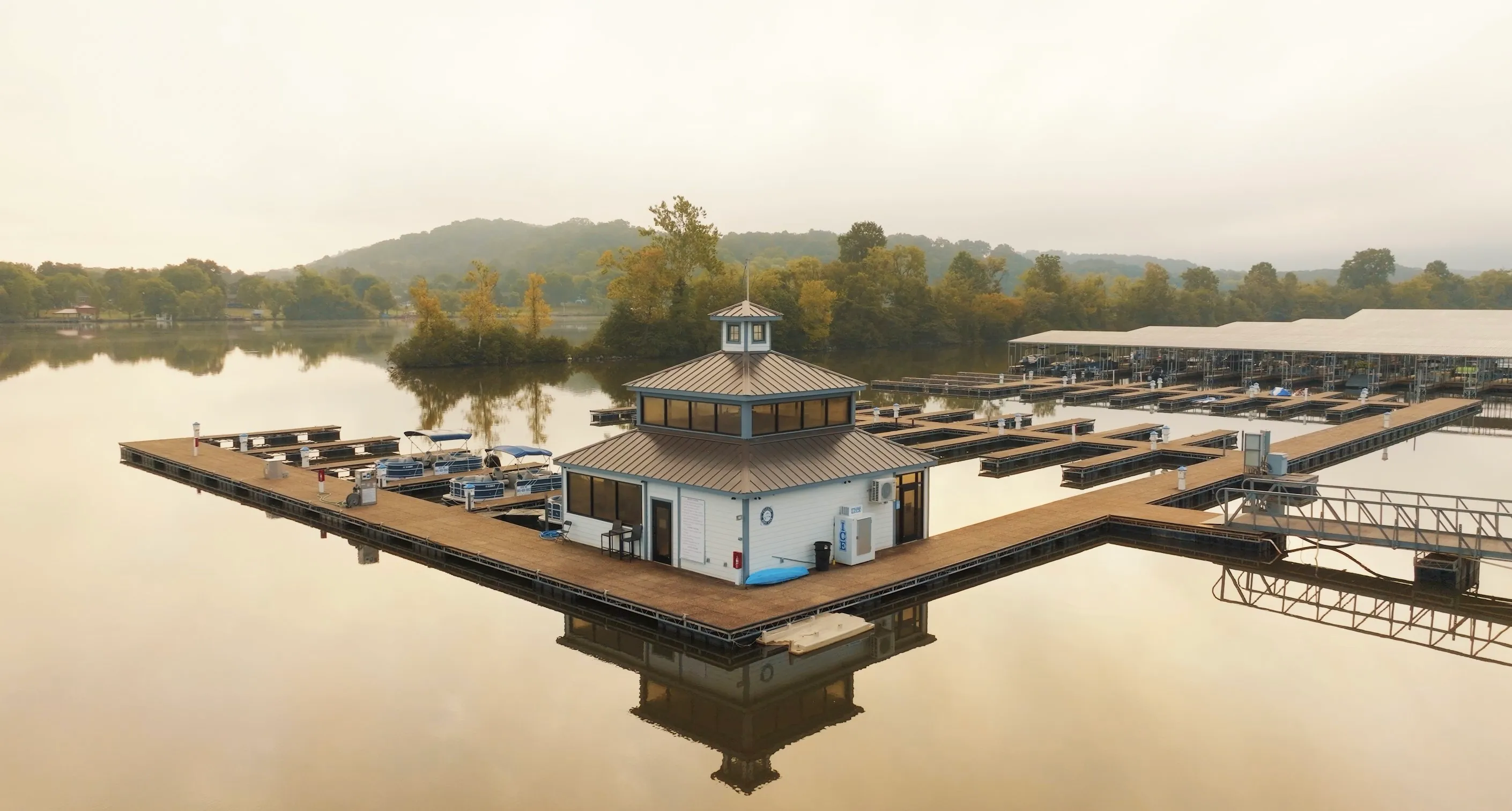
Tennessee National is on the lake TWRA is describing. It is a private, gated lake and golf community on Watts Bar Lake in Loudon, Tennessee, with a full-service marina and 140+ boat slips.
- Where it sits. Loudon is toward the upper end of the lake. Fort Loudoun Dam is at Lenoir City, and Lenoir City is about 15 minutes from Tennessee National. TWRA names the water below that dam for walleye and sauger from fall into winter and for smallmouth bass year-round.
- Ask where you can fish inside the gates. Whether fishing is allowed from the marina docks or the lakefront boardwalk is a question for the marina.
- A slip is a separate question. Start at boat slips.
- A boat is not the only way to fish this lake. TWRA's page points out good times for bank anglers too. Do you need a boat to live at Tennessee National? covers life here without one.
- A dock of your own. Not every waterfront property can have one. Can you build a dock on Watts Bar Lake? explains who decides.
The honest part
A list of fish is not a promise of fish.
- The lake is big and it is long. Watts Bar has more than 39,000 acres of water and 722 miles of shoreline. TWRA's best smallmouth water is the mid to lower lake, and Loudon is toward the upper end. Some of what is on this page is a long boat ride away.
- TWRA is plain about the weak spots. It says Watts Bar is not a high destination for redear, that spotted bass catch rates have fallen to nearly nothing and that muskie are not caught in large numbers.
- This page is not the rulebook. The fishing facts here come from TWRA's Watts Bar Reservoir page, TWRA's license page and TDEC's fish advisory list. Limits change and advisories get revised. Read the current pages at tn.gov/twra and tn.gov/environment before you rely on any of it.
Frequently asked questions
What kind of fish are in Watts Bar Lake?
Watts Bar Lake holds largemouth bass, smallmouth bass, white and black crappie, bluegill, striped bass, white bass, walleye, sauger and blue, channel and flathead catfish. The Tennessee Wildlife Resources Agency (TWRA) describes those fish on its Watts Bar Reservoir page, along with yellow perch and muskie in smaller numbers.
What is the best time of year to fish Watts Bar Lake?
The Tennessee Wildlife Resources Agency (TWRA) describes fishing on Watts Bar Lake in every season. TWRA says crappie action picks up in March and April, largemouth bass spawn from March to May, and catfish get very active beginning in June. TWRA calls late winter and early spring the best time to pursue walleye and sauger.
Do you need a fishing license on Watts Bar Lake?
Yes, in most cases. The Tennessee Wildlife Resources Agency (TWRA) says anyone who takes or tries to take fish must have a valid fishing license, and that no license is required for ages 12 and under. The rule covers residents and visitors on Watts Bar Lake. TWRA sells licenses through GoOutdoorsTennessee and its license agents.
Is it safe to eat fish from Watts Bar Lake?
The Tennessee Department of Environment and Conservation (TDEC) lists a fish consumption advisory for Watts Bar Reservoir because of PCBs. TDEC's August 2026 list says catfish, striped bass and hybrid bass from the Tennessee River portion should not be eaten, and it gives a precautionary advisory for five more fish. Read TDEC's current list before eating fish from Watts Bar Lake.
Is there fishing near Tennessee National?
Yes. Tennessee National is a private, gated lake and golf community on Watts Bar Lake in Loudon, Tennessee. The Tennessee Wildlife Resources Agency (TWRA) says Watts Bar offers great opportunities for a multitude of game fish. Ask the Tennessee National marina where fishing is allowed inside the community.
Facts about Tennessee National come from the community. Lake facts come from TVA. Rules, taxes, loans and insurance change, so confirm anything that affects a purchase with the right office or professional before you buy.