
You spent 30 years squeezing in weekend rounds between work, family, and everything else. Now you’ve got five mornings a week and no excuses.
Retirement is the single biggest opportunity most golfers ever get to actually improve. More reps. More consistency. More time to work on the parts of your game you’ve been ignoring since your 30s.
But more time on the course doesn’t automatically mean lower scores. Here’s how to make the most of it.
Play More, But Practice Smarter
The biggest trap retired golfers fall into: playing 18 holes five days a week and never practicing.
Playing is fun. Practice is where scores drop. Dedicate at least two sessions per week to focused work — not just hitting balls on the range, but working on specific weaknesses.
Split your practice time roughly like this:
- 40% short game — chipping, pitching, bunker shots from 50 yards and in
- 30% putting — lag putts, 4-to-8-footers, green reading
- 30% full swing — driver, irons, course management shots
Most amateurs spend 80% of their practice time on the driver. That’s exactly backwards. The fastest way to shave five strokes is inside 100 yards.
Get a Lesson (Yes, Even Now)
“I’ve been playing for 40 years, I don’t need a lesson.”
That mindset costs you strokes every round. A good teaching pro can spot mechanical issues in 15 minutes that you’ve been compensating for since the Clinton administration.
Two to three lessons per year is enough for most retirees. Focus on one swing change at a time. Let it become automatic before moving on. The goal isn’t to rebuild your swing — it’s to eliminate the one or two habits that cost you the most.
Many golf communities, including Tennessee National, have PGA professionals on staff who specialize in working with players over 50. They understand the physical changes that affect your swing and can adjust your approach without making you feel like a beginner.
Protect Your Body
More golf means more repetitive stress on your back, shoulders, knees, and wrists. The golfers who play well into their 70s and 80s are the ones who take recovery seriously.
Before every round: 10 minutes of dynamic stretching. Hip circles, torso rotations, arm swings, hamstring stretches. Cold muscles and a fast backswing are how injuries happen.
After every round: Light stretching or a short walk. Stay hydrated. If something hurts, address it early — don’t play through pain for six months and then wonder why your shoulder needs surgery.
Weekly: Consider yoga, swimming, or light resistance training. Core strength directly translates to clubhead speed and consistency. You don’t need to become a gym rat. Thirty minutes, three times a week, makes a measurable difference on the course.
Play the Right Tees
Ego is the enemy of good golf.
If you’re hitting your 7-iron 140 yards instead of 160, move up a tee box. There’s nothing fun about hitting 3-wood into every par 4. Playing the appropriate tees means more greens in regulation, more birdie looks, and more enjoyment.
Most courses mark tees by distance, not age. Pick the set that puts your approach shots in the 130-to-150-yard range on par 4s. That’s where scoring happens.
At Tennessee National, the championship course plays from multiple tee positions, so you can find the setup that matches your current game — and adjust as your game improves.
Upgrade Your Equipment (Strategically)
Club technology has changed dramatically in the last decade. If you’re playing with the same set you bought in 2012, you’re leaving distance and forgiveness on the table.
The highest-impact upgrades for most senior golfers:
- Driver with higher loft (10.5 to 12 degrees) — more launch, more carry, less side spin
- Hybrid clubs replacing long irons — easier to hit from the fairway and rough
- Graphite shafts throughout the bag — lighter weight reduces fatigue over 18 holes
- A properly fitted putter — most golfers have never been fitted for a putter, and it’s the club you use most
Don’t buy everything at once. Get fitted by a professional, prioritize the gaps, and upgrade over a season or two.
Build a Playing Routine
Consistency in your schedule breeds consistency in your game. The best retired golfers treat their golf week like a loose training plan:
Monday: Practice round or range session focused on weaknesses.
Tuesday/Thursday: Regular rounds with a consistent group. Having regular playing partners keeps you accountable and competitive.
Wednesday: Short game practice — putting green and chipping area.
Friday or Saturday: Fun round, tournament, or guest day.
One day off: Your body needs it. Trust the process.
A community with an active golf culture makes this easier. When your neighbors are heading to the first tee at 8 a.m., you don’t have to manufacture motivation.
Track Your Stats
You can’t improve what you don’t measure. Use a simple app or scorecard tracking to monitor:
- Fairways hit — are you getting off the tee cleanly?
- Greens in regulation — are your approach shots landing on the putting surface?
- Putts per round — this number tells you more than your total score
- Up-and-down percentage — how often do you save par from off the green?
After a month of tracking, patterns emerge. Maybe you’re great from the tee but hemorrhaging strokes on the green. Maybe your iron play is sharp but your chipping needs work. Data removes guesswork.
Join a Golf Community That Supports Growth
The golfers who improve fastest after retirement share one thing: they’re surrounded by other golfers who play regularly, compete casually, and push each other to get better.
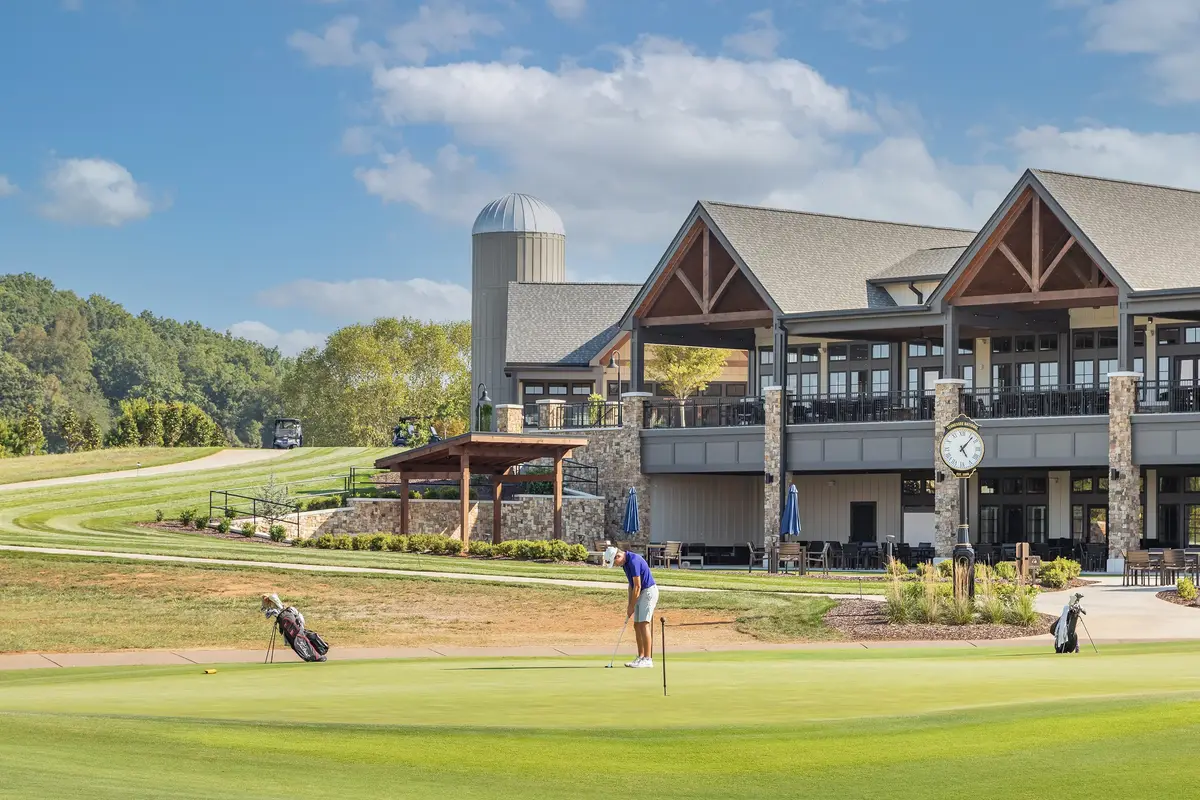
Tennessee National’s championship 18-hole course sits on Watts Bar Lake with mountain views that make every round feel special. But beyond the scenery, it’s the daily rhythm of golf — regular groups, friendly matches, access to instruction, and a course you can walk out your door to play — that turns retirement golf from a hobby into a real part of your life.
Year-round play in East Tennessee means no five-month winter layoff. No starting over every spring. Just steady improvement, week after week, in a place designed for it.
Your best golf is still ahead of you. Come see the course at Tennessee National and find out what year-round play feels like.